
 It is relatively easy to say that the Church of England needs reform.
The more uncomfortable question is: what are we actually going to do about it?
Reform can easily become something we think other people need to do. Bishops need to change. Synod needs to change. The theological colleges need to change. Church House needs to change. All of which may well be true.
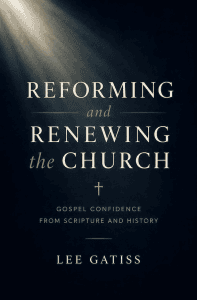
But several chapters in my new book, Reforming and Renewing the Church, turn the question around. What would it mean for us to be serious about reform?
Here are six suggestions.
1. Keep your promises
Church of England clergy make some extremely serious promises.
At ordination we don’t merely acquire a dog collar and permission to take services. We swear oaths and make solemn declarations before God. Among them is the promise of “true and canonical obedience” to the bishop—not absolute obedience, importantly, but obedience “in all things lawful and honest”.
There are also solemn commitments concerning the doctrine and ministry of the Church of England.
We ought to mean them.
The Bible takes oath-making extremely seriously, and Anglican doctrine has always distinguished solemn, truthful oaths from the vain and manipulative swearing condemned by Jesus. Such promises are to be made in “justice, judgement, and truth”.
Reform begins with integrity. Before asking whether everyone else is being faithful to their commitments, clergy might ask whether we are keeping ours. If you’re ordained, when did you last pray over the vows you took in the ordination service, to preach the word and to live it out in a particular way?
2. Take bishops seriously
Evangelicals can have a complicated relationship with bishops.
This is understandable. Many orthodox Anglicans have become deeply distrustful of the episcopate, not least because bishops have themselves led some of the developments which have caused such anxiety in recent years.
But the answer isn’t to pretend bishops don’t matter.
There is a good biblical case for oversight beyond the local congregation, and historically most Christians have recognised some form of episcopal ministry. In Reformation Anglicanism, bishops were supposed to uphold sound doctrine, appoint and discipline ministers, resolve disputes, visit churches and help maintain the health of the church. They were to be servants, not lords, exercising “sound doctrine, sober authority and wise counsel”.
So if we want to reform an episcopal church, we need good bishops.
And that means evangelicals should be willing not only to criticise episcopacy when it goes wrong, but to encourage suitable people to consider episcopal ministry and take seriously the task of reforming it.
3. Cultivate courage, persistence—and joy
Reform is tiring.
Anyone who spends too much time following General Synod, episcopal statements, church politics and social media can testify to that. I admit in the book that I once tried giving up the Church Times for Lent because reading it wasn’t doing me any good. Unfortunately, someone has to read it.
But grim determination isn’t enough.
What evangelicals need in turbulent times is courage, persistence, and joy. Courage to speak when it would be easier to remain silent. Persistence to keep going when nothing seems to change. And joy, because Christian faithfulness isn’t supposed to turn us into perpetually angry and miserable people.
The Ephesian church was commended by Jesus because they worked hard, tested false teachers and persevered without growing weary.
Persist, certainly. But don’t let fighting for the church destroy your enjoyment of Christ.
4. Believe Anglicanism is actually worth the effort
There isn’t much point spending decades trying to reform something we secretly think isn’t worth preserving.
Is Anglicanism biblical? My answer in the book is yes.
It isn’t the only way to be a biblical Christian. Some of my best friends are Baptists and Presbyterians! But evangelical Christians need have no qualms of conscience about committing themselves to the Church of England and its thousands of churches in villages, towns and cities across the country.
Those churches continue to need the gospel. And the Church of England continues to provide extraordinary opportunities to proclaim Christ to people who might otherwise have little contact with a Christian church.
If we’re going to reform it, we need some confidence that it is worth reforming.
5. Stop being double-minded
One chapter is called Evangelicals in Two Minds.
That’s because we can be strangely ambivalent about the Church of England. We want its pulpits, buildings, schools, legal protections and opportunities for ministry. We insist that its Reformation formularies support our theology.
And then sometimes we talk as though the whole thing is somebody else’s church.
You cannot exercise much influence over an institution if you’ve already decided psychologically that you don’t belong to it.
Reform requires commitment. Not uncritical institutional loyalty, certainly. The church must always stand under the judgement of God’s word. But neither can we permanently hedge our bets, simultaneously staying and mentally leaving.
If we’re here, let’s be here and serve.
6. Grow the people who will reform it after us
Perhaps this is the most important.
Church reform is a generational project. We need ministers, theologians, evangelists, bishops, lay leaders and others who will still be faithfully serving long after some of us have retired.
History gives us plenty of ideas. Thomas Chalmers treated his Glasgow parish as a training ground, drawing laypeople into teaching, visiting and caring. His theological students combined serious study with practical ministry. And he connected leadership development directly to evangelistic expansion: more churches required more ministers, which required better training.
The lessons remain strikingly contemporary. Start formation early. Give people supervised practice. Fund training properly. Pay attention to institutional culture. Hold character and theological competence together. And don’t imagine that ministerial formation finishes when somebody receives a certificate.
So perhaps the question isn’t simply:
How are we going to reform the Church of England?
It is also:
Who are we training to reform it in twenty or thirty years’ time?
Reforming the church isn’t just about winning the next vote or surviving the next crisis. It means keeping our promises, taking our structures seriously, developing Christian character, committing ourselves to the task, and preparing another generation to carry it on.
There’s plenty that “they” need to do. But reform might usefully begin with us.
These themes are explored more fully in several chapters of my new book, Reforming and Renewing the Church: Gospel Confidence from Scripture and History, published by Church Society.
Lee Gatiss is the Director of Church Society